Crushed by the Clock: How Speculative Fiction Makes Time Something You Can Feel
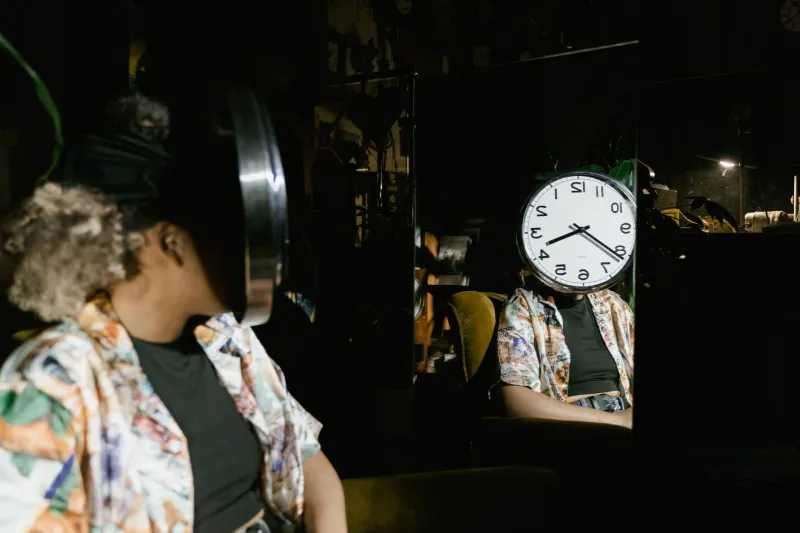
There is a particular kind of dread that arrives not with a single catastrophic event but with the dawning recognition that the world is moving faster than you are. It does not announce itself. It accumulates. And it is precisely this quality—the slow, grinding pressure of time experienced as a material weight rather than an abstract measurement—that a generation of speculative fiction writers has begun to examine with remarkable precision.
The question these authors are asking is deceptively simple: what happens when time stops being a backdrop and becomes a force? What happens when the clock is not merely ticking but pressing down?
From Metaphor to Matter
For much of the twentieth century, science fiction treated time primarily as a mechanism. It was the engine of the time machine, the variable in relativistic equations, the commodity traded by immortal civilizations. Even when writers complicated it—through loops, paradoxes, and alternate timelines—time retained a certain abstraction. It was the subject of thought experiments rather than the texture of lived experience.
Contemporary speculative fiction has largely abandoned that posture. The shift is not merely thematic but structural. Writers are increasingly embedding temporal distortion directly into the grammar of their prose—into sentence rhythm, narrative pacing, and the granular detail of what characters notice and what they fail to register. Time, in these works, is not something that happens around characters. It is something that happens to them, in the same way weather or illness or grief happens to them.
This transformation reflects something real about the cultural moment. Americans in the early twenty-first century inhabit an environment of relentless acceleration—technological, informational, political—in which the pace of change itself has become a source of ambient anxiety. Speculative fiction, always attuned to the pressures its readership cannot yet name, has responded by learning to render that anxiety on the page with physical immediacy.
The Texture of Acceleration
One of the primary techniques writers employ is what might be called temporal telescoping: the compression of vast spans of change into a single scene, forcing the reader to absorb decades of consequence in the space of a paragraph. The effect is deliberately disorienting. A character steps away from a familiar place and returns to find it unrecognizable—not because of a single dramatic event but because time has simply moved through it like water through stone.
This technique works because it mimics a recognizable psychological experience. Anyone who has returned to a childhood home, a former neighborhood, or even an old social media profile understands the particular vertigo of confronting accumulated time. Speculative fiction amplifies this sensation to the point of physiological discomfort, making the reader feel the weight of elapsed years rather than merely acknowledge it intellectually.
At the opposite extreme, writers employ deliberate deceleration—scenes stretched to an almost unbearable length, where each moment is excavated with obsessive attention. This, too, is a form of temporal violence. When time slows to a crawl in speculative fiction, it is rarely peaceful. It is the stillness of a held breath, the suspension before impact, the terrible patience of something that cannot be stopped.
Wearing Time on the Body
Perhaps the most visceral technique in this emerging tradition is the literalization of temporal wear—the rendering of time's passage as physical damage visible on characters' bodies, minds, and environments. This goes beyond simple aging. Writers are depicting characters who have been used by time: eroded, compressed, stretched thin by the velocity of their own histories.
The speculative framework is essential here because it permits writers to externalize what is otherwise interior. In realistic fiction, the psychological toll of living through rapid change must be inferred. In speculative fiction, it can be made visible: a character whose memories have literally calcified, whose perception of duration has been biochemically altered, whose body bears the physical marks of having moved through time at the wrong speed. The fantastical conceit is not escapism. It is a precision instrument for capturing something true.
This approach also allows writers to distinguish between different qualities of temporal experience. Not all acceleration is equivalent. The time that compresses under joy differs from the time that compresses under trauma. The deceleration of boredom differs from the deceleration of grief. By giving these experiences material form, speculative fiction can map distinctions that ordinary language struggles to articulate.
The Architecture of Urgency
Beyond individual scenes and character experiences, writers in this mode are making temporal pressure structural—embedding it in the architecture of entire narratives. Serialized work, in particular, has become a natural home for these experiments. The form itself enacts a kind of temporal negotiation between the reader's present and the story's unfolding future, and writers who are conscious of this dynamic can use it to remarkable effect.
A narrative that accelerates its own release of information, that withholds and then floods, that establishes rhythms only to violently disrupt them, creates in the reader a direct experience of temporal disorientation. The story does not merely describe what it feels like to live through acceleration. It induces that feeling. This is the ambition at the heart of the most sophisticated speculative fiction being produced today: not to represent the experience of time under pressure, but to become it.
Why This Matters Now
It would be easy to read this trend as purely aesthetic—as writers discovering a new set of formal tools and deploying them for their own sake. But the persistence and urgency of the theme suggests something more substantial. Speculative fiction has always functioned as a literature of cultural diagnosis, and the diagnosis being offered here is clear: we are a society that no longer knows how to experience time at a human scale.
The velocity of contemporary life—the news cycle that renders yesterday's crisis ancient history, the technology that obsoletes itself before it is fully understood, the social landscape that reshapes itself faster than any individual can adapt—has produced a widespread and largely unarticulated disorientation. Speculative fiction writers, working at the intersection of imagination and rigorous formal craft, are attempting to give that disorientation a shape readers can hold.
In doing so, they are performing one of literature's oldest and most essential functions: making the invisible legible, the abstract physical, the collective personal. Time, in their hands, is no longer the clock on the wall. It is the pressure in the chest, the erosion at the edges, the vapor trail of everything that has already passed beyond reach—and the weight of everything still bearing down.
The writers who are doing this most effectively are not simply writing about temporal anxiety. They are building the literary equivalent of an atmosphere: dense, pressurized, and impossible to ignore. To read their work is to feel, however briefly, exactly what they mean.