Ghosts of Tomorrow: How Speculative Fiction Navigates the Wreckage of Abandoned Futures

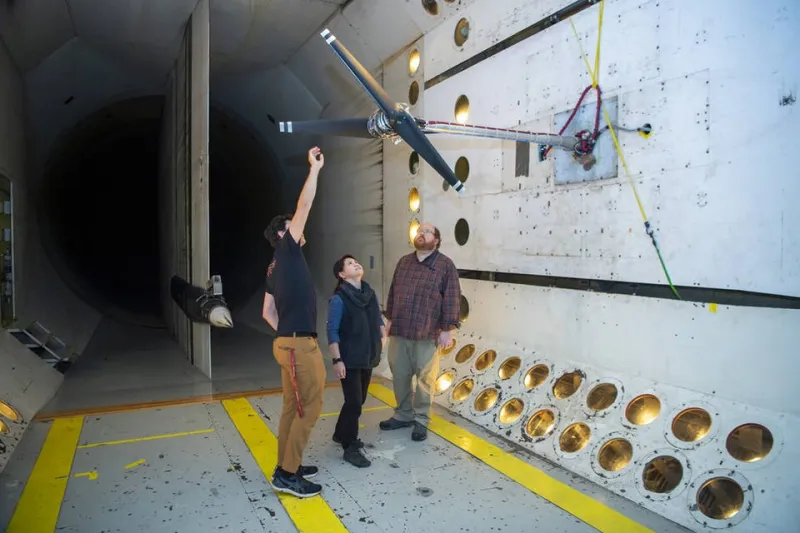
Photo by Photo by Haberdoedas II on Unsplash on Unsplash
There is a particular kind of melancholy that attaches itself to an airport terminal built in 1972. The swooping concrete canopies, the optimistic geometry, the suggestion of a civilization that once believed travel would feel like ascension—all of it stands now as a monument to a future that arrived only partially, then stalled. Contemporary speculative fiction has become acutely sensitive to exactly this feeling. Its most compelling new works are not set in futures we are hurtling toward. They are set in the aftermath of futures we already passed through without noticing.
Call it the inheritance problem. Every generation of science fiction writers bequeaths to the next not only a set of narrative conventions but a landscape of imagined tomorrows—some realized in distorted form, some quietly discarded, some calcified into infrastructure that the present must now inhabit and explain. The writers working today did not choose the world they received. They are, in a very real sense, tenants of other people's blueprints.
The Architecture of Broken Promises
What makes this literary territory so fertile is its refusal of clean moral categories. The abandoned futures that haunt contemporary speculative fiction are rarely villainous in origin. The automated cities, the gene-edited agricultural systems, the networked urban grids—these were, at the moment of their conception, earnest attempts at improvement. The tragedy embedded in so much current speculative work is not that someone built something evil. It is that someone built something hopeful, and the hope calcified into constraint.
This is a meaningfully different anxiety than the one that drove science fiction through most of the twentieth century. The classic dystopian mode asked: what if the powerful deliberately design a world that crushes the powerless? The emerging mode asks something quieter and in many ways more unsettling: what if well-intentioned systems simply outlive the conditions that justified them, and no one can agree on how to dismantle what their grandparents built with such conviction?
Characters in these narratives do not face totalitarian architects. They face zoning codes, agricultural patents, atmospheric remediation contracts, and social algorithms whose original designers retired decades ago. The antagonist, where one exists at all, is often institutional inertia dressed in the clothing of progress.
Between the Feared and the Promised
One of the defining formal qualities of this new speculative mode is its resistance to the familiar poles of utopia and dystopia. Earlier science fiction operated with considerable comfort in both registers. Writers knew how to build the gleaming city on the hill; they knew equally well how to construct the surveillance state, the poisoned earth, the boot stamping on a human face. These were powerful imaginative tools precisely because they offered clarity.
What contemporary speculative fiction increasingly stages is the space between those poles—a world that is neither catastrophically broken nor genuinely flourishing, but suspended in a condition of managed disappointment. The technological infrastructure functions, after a fashion. The social contracts hold, more or less. But the gap between what was promised and what was delivered has become a kind of permanent weather system, something everyone has adapted to without anyone having consciously chosen it.
This suspension is not passivity. The finest work in this vein uses that gap as a pressure chamber. Characters who have grown up inside inherited systems develop an intimate, often painful relationship with the logic of those systems—understanding them well enough to see both their original intention and their present distortion. That dual vision, that capacity to perceive the ghost of a future inside the bones of the present, is where the emotional and philosophical weight of these narratives accumulates.
The Craft of Layered Temporality
Writing convincingly about inherited futures requires a particular set of technical skills. The world must carry its own history visibly—not through exposition, but through the texture of daily life. A water reclamation system that hums beneath a city should feel like something built by people who feared scarcity, even if the characters living above it have never consciously thought about that fear. The design philosophy of a past generation should be legible in the present tense of the narrative, the way mid-century modernism is still legible in the bones of American public housing.
This demands what might be called stratigraphic worldbuilding—the construction of fictional environments in visible geological layers, each stratum representing a different era's assumptions about what the future should look like. The writer's task is to make those layers perceptible without making them didactic, to let readers feel the weight of accumulated decisions without being lectured about them.
Dialogue in these narratives often carries the load of historical argument. Characters who disagree about the present are frequently, beneath the surface, disagreeing about which past vision of the future deserves rehabilitation and which deserves burial. These are not abstract philosophical debates. They are arguments about land, about air, about the terms of survival—conducted by people who did not choose the terms they are arguing within.
What the Wreckage Reveals
The literary turn toward inherited futures is not difficult to locate in the American cultural moment. A significant portion of the country's physical and social infrastructure was designed during periods of radical optimism—the postwar boom, the space age, the early internet era—and has since been revealed as either inadequate to its promises or actively harmful in ways its designers did not foresee. Living inside those structures, negotiating their failures while depending on their functions, is a genuinely strange experience. It produces a particular kind of temporal disorientation: the sense of being simultaneously in the present and in someone else's future.
Speculative fiction, with its native fluency in imagined time, is perhaps uniquely equipped to render that disorientation with precision. By building worlds that make the layering explicit, by giving characters the task of navigating what previous visions left behind, these writers are doing something that realism, for all its virtues, struggles to accomplish. They are making the invisible architecture of inherited expectation visible—turning the ghost of tomorrow into something readers can walk through, examine, and recognize.
The vapor trails left by yesterday's futures are still visible in the sky above us. The best speculative fiction of our moment is learning to read them not as nostalgia, and not as warning, but as the most honest map we have of where we actually are.