The Open Door We Dare Not Close: Speculative Fiction's Deepening Resistance to Final Answers
The Open Door We Dare Not Close: Speculative Fiction's Deepening Narrative Resistance to Final Answers
There is a particular sensation that attends the final pages of a great novel — a kind of atmospheric pressure change, a sense that the world assembled across hundreds of pages is about to be sealed, catalogued, and surrendered. For most of literary history, that sealing was considered a virtue. Closure was craft. Resolution was the mark of a writer who had thought the problem through to its terminus.
Something has changed.
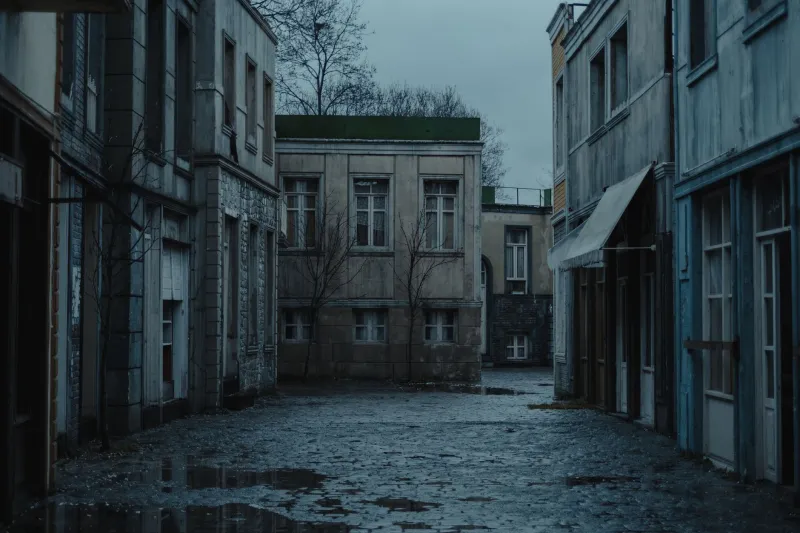
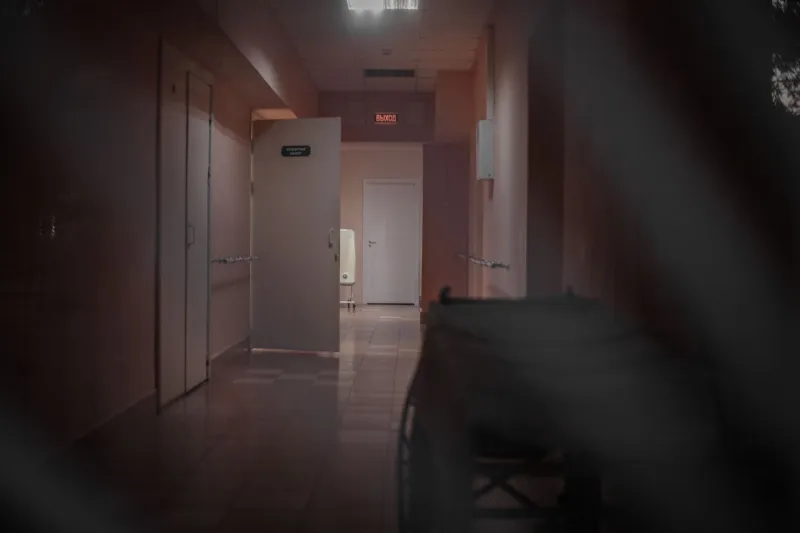
Across the landscape of contemporary science fiction and speculative literature, that terminal pressure is increasingly absent. Stories end without concluding. Arcs dissolve rather than complete. Characters arrive at thresholds and turn away. The door that once swung shut with satisfying finality now hangs perpetually ajar, and the genre's most celebrated voices seem to prefer it that way.
The question worth asking — seriously, with the patience the subject demands — is why.
The Architecture of Unresolved Futures
To understand the modern aversion to closure in speculative fiction, it helps to examine what endings actually do. A resolved narrative makes an argument. It says: given these conditions, this is how things turn out. The villain is defeated or is not. The civilization endures or collapses. The technology liberates or destroys. An ending is, at its core, a claim about causality — a declaration that the variables have been weighed and a verdict rendered.
For writers working in the mid-twentieth century, that declarative confidence felt earned. The futures they imagined were distant enough to be theoretical, and the act of imagining them was itself a form of intellectual daring. Isaac Asimov could resolve his Foundation across centuries because the distance between his reader's present and his narrative's future was wide enough to accommodate certainty. The ending was a destination, and destinations, by definition, could be reached.
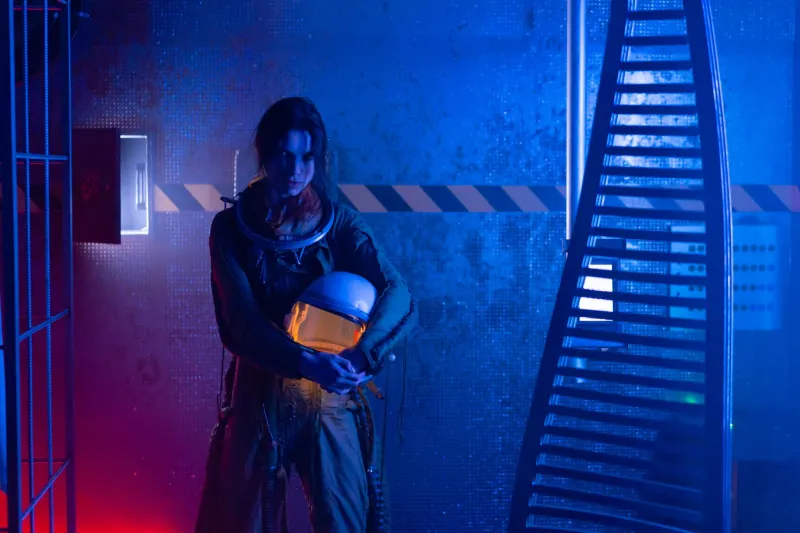
The contemporary moment offers no such comfort. Writers working today are not projecting into a safely abstract tomorrow — they are narrating a present that has already begun to resemble the scenarios their predecessors imagined as warnings. Artificial general intelligence is not a thought experiment; it is a line item in quarterly earnings reports. Climate tipping points are not dramatic devices; they are coordinates on scientific timelines. When the future is this close, finishing the story feels less like artistic resolution and more like making a bet you cannot afford to lose.
Technological Lock-In and the Paralysis of Consequence
There is a concept in technology policy and economic theory known as path dependency — the idea that early decisions constrain future options in ways that become progressively harder to reverse. A platform achieves dominance not because it is superior but because it arrived first and accumulated users whose departure would be too costly to contemplate. A regulatory framework calcifies around the infrastructure it was designed to govern, even after that infrastructure has been superseded.
Speculative fiction writers, whether or not they use the term, have internalized this dynamic completely. The refusal to conclude a narrative is, in many cases, a refusal to commit to a path. An open ending preserves optionality. It leaves the reader in a state of productive uncertainty, which is — the logic goes — more honest than the false confidence of resolution.
This impulse is understandable. It is also, on closer inspection, somewhat dishonest in its own right.
An ending that withholds judgment is not neutral. It is a choice with consequences as real as any dramatic resolution. When a novel about artificial consciousness declines to tell us whether the machine's inner life is genuine, it does not leave the question open — it trains the reader to regard that question as permanently unanswerable, which is itself a philosophical position. When a climate narrative ends at the moment of decision rather than after it, the effect is not suspense but learned helplessness, a formal enactment of the paralysis the story ostensibly critiques.
The Reader's Complicity
It would be a mistake to locate this dynamic entirely within the writer's choices. The contemporary American reader — the audience that has grown up navigating infinite-scroll media environments, participatory fandoms, and serialized content designed to sustain engagement rather than deliver satisfaction — has developed its own ambivalent relationship with finality.
Closure, in the cultural grammar of the streaming era, is often experienced as loss. When a beloved series ends, the community organized around it disperses. When a narrative resolves, the imaginative space it occupied contracts. The open ending is, from this perspective, a gift to the audience: permission to continue inhabiting the world, to generate theories, to defer the grief that accompanies completion.
This is not entirely cynical. The participatory pleasures of an unresolved narrative are genuine. But they come at a cost that speculative fiction, of all genres, should be most alert to: the cost of never being forced to reckon with outcomes.
Science fiction has historically derived its moral authority from its willingness to follow premises to their conclusions. The cautionary tale works because it concludes. Orwell's Oceania is not left ambiguous; its totality is the point. Le Guin's Omelas does not hedge its central horror with narrative uncertainty. The ending, in these cases, is the argument's blade — the element that makes the story cut.
When Refusal Becomes the Dystopia
There is a reading of contemporary speculative fiction's resistance to closure that is, on reflection, more troubling than any of its individual unresolved narratives. Considered collectively, the genre's drift away from definitive endings maps onto something recognizable from outside fiction entirely: the behavior of institutions and systems that have become too complex, too interconnected, and too consequential to permit decisive action.
We do not resolve the algorithmic governance question because the systems are already embedded. We do not conclude the surveillance debate because the infrastructure is already built. We defer, extend, pilot-program, and revisit. We keep the door open because closing it in the wrong direction feels catastrophic, and we have lost confidence in our ability to identify the right direction.
Speculative fiction, in refusing to close its own doors, may be doing something more than reflecting this condition. It may be normalizing it — teaching its readers, chapter by chapter, that the appropriate response to consequential questions is perpetual deferral.
The genre has always been most powerful when it refuses comfort. Perhaps the most genuinely challenging thing contemporary science fiction could do — the move most resistant to easy consumption and most faithful to the tradition's best instincts — is to end. Clearly. Irrevocably. With the full weight of consequence.
Not because certainty is available. It is not. But because the discipline of imagining outcomes, and committing to them on the page, is precisely the cognitive and moral exercise that the present moment most urgently requires.
The vapor trails we follow into the future dissipate eventually. The question is whether we are willing to mark where they led.