The Beauty of What Remains: How Science Fiction Finds Its Soul in the Act of Leaving
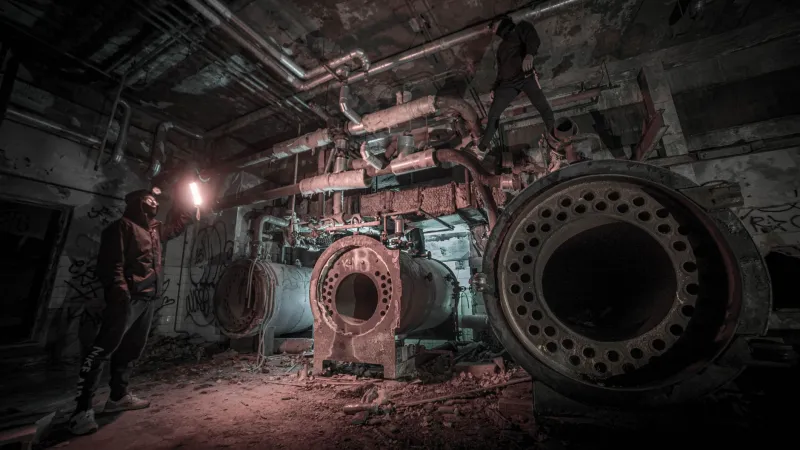
Science fiction has long been understood as a literature of arrival—of new worlds, new technologies, and new civilizations waiting just beyond the horizon. Yet the genre's most emotionally durable moments are rarely found in what lies ahead. They are found in what has been surrendered, dismantled, or simply left to decay in the wake of human progress. The abandoned space station with its flickering emergency lights. The last cassette tape spinning in a world that no longer manufactures the machines to play it. The crumbling interstate overpass half-buried beneath a continent's worth of reclaimed forest. These are the images that linger. These are the vapor trails the genre leaves in the mind of the reader long after the final page has been turned.
The question worth examining is not merely why speculative fiction returns to such imagery with such frequency, but why that return feels so aesthetically and emotionally necessary—and what it reveals about the particular anxieties of contemporary American storytelling.
Departure as a Structural Principle
At its most fundamental level, departure organizes the architecture of science fiction the way gravity organizes physical space. A story cannot move forward without first establishing what it is moving away from. Exodus narratives require an origin world rendered vivid enough to mourn. Technological leap-forward stories require the obsolete machine sitting in the corner, still warm, still faintly humming. The genre's forward momentum is, paradoxically, generated by the gravitational pull of what has been left behind.
This is not accidental. Writers working in speculative fiction have increasingly understood that emotional resonance does not live in the destination. It lives in the threshold—in the precise moment when a character or a civilization crosses from one condition of existence into another and cannot cross back. The act of departure crystallizes value. It is only when the farmhouse on the Kansas plains shrinks to a pale dot in the colony ship's rear camera feed that the reader—and the character—fully understands what that farmhouse meant.
Contemporary practitioners of the form have refined this instinct into something approaching a governing aesthetic. The visual and sensory language of abandonment—rust blooms spreading across steel, weeds splitting pavement, the particular silence of a room from which all human voices have permanently withdrawn—has become one of speculative fiction's most reliable instruments of emotional precision.
The Poetics of Obsolescence
Few subjects animate this aesthetic more powerfully than technological obsolescence. American culture carries a distinctive relationship with discarded machinery. From the rusting automobile graveyards of the Rust Belt to the decommissioned NASA launch pads of Cape Canaveral, the nation's physical landscape is already saturated with the melancholy of superseded technology. Speculative fiction writers do not invent this atmosphere. They amplify and extrapolate it.
Consider how often the genre's most resonant scenes are staged not in gleaming laboratories or aboard sleek starships, but in the maintenance corridors, the storage bays, the decommissioned server rooms. These are the spaces where yesterday's miracles go to be forgotten. A robot designed to perform surgery, now repurposed as a doorstop. A language translation algorithm trained on a dialect that no living person still speaks. A personal computer the size of a city block, its punch cards scattered like autumn leaves across a floor no one has swept in decades.
The writer who lingers in these spaces is not simply indulging in nostalgia. They are performing a philosophical act. By rendering obsolete technology with the same sensory care typically reserved for the new and the wondrous, speculative fiction insists that value does not expire on the schedule that progress demands. It argues, quietly but persistently, that something is lost in every act of replacement—and that the loss deserves to be witnessed.
Societal Collapse as Elegy
If obsolete technology invites a kind of intimate mourning, the collapse of entire societies invites something larger and more difficult to name. Post-collapse narratives have surged in American speculative fiction over the past two decades, and their emotional register has shifted markedly. Where earlier iterations of this subgenre tended toward the survivalist and the triumphant, contemporary treatments are increasingly elegiac in their orientation.
The collapsed civilization is no longer primarily a backdrop against which resourceful protagonists demonstrate their resilience. It has become, in the hands of the genre's most thoughtful writers, a subject in its own right—an entity whose passing demands the same careful attention we might give to a dying language or a vanishing ecosystem. The overgrown suburb. The library whose books have been repurposed as insulation. The highway rest stop where travelers once paused, briefly, between one place and another, now serving as the permanent residence of people who have nowhere left to travel toward.
What makes this treatment so distinctively contemporary is its refusal to assign blame or offer consolation. The beauty it finds in ruins is not the romantic beauty of the nineteenth-century landscape painters who thrilled to crumbling castles and dramatic desolation. It is a quieter, more uncomfortable beauty—the kind that implicates the observer, that asks whether the civilization being mourned deserved its fate, and whether the mourning itself is a form of complicity.
Why the Gaze Turns Backward
One could argue that this preoccupation with departure and abandonment reflects a broader cultural exhaustion with the mythology of progress—a mythology that has been under sustained pressure in American life for some time now. The twentieth century's confident promise that each decade would be materially and morally superior to the last has not aged particularly well. Speculative fiction, which has always served as a seismograph for cultural anxiety, registers this disillusionment with characteristic precision.
But there is something more specific at work in the genre's aesthetic of departure. Science fiction, perhaps more than any other literary form, is acutely aware of its own temporal position. It writes from a present that it knows will become a past, toward futures it cannot fully see, about technologies and societies that will themselves eventually be abandoned and mourned by whatever comes after. The genre is haunted by its own obsolescence in a way that literary realism, anchored in a perpetual present tense, is not.
This self-awareness lends the backward gaze a recursive quality. When a speculative fiction writer describes the beauty of an abandoned spacecraft with loving attention to its corroded hull markings and its drifting cargo of forgotten personal effects, they are not only describing a fictional object. They are acknowledging the fragility of all constructed things—including, implicitly, the story itself, which will one day be the artifact of a world that no longer quite exists.
The Lingering Trail
The vapor trail is, by definition, a record of departure. It is the visible evidence that something passed through this space, burned its fuel, and moved on—leaving behind only the slowly dispersing signature of its passage. Science fiction at its most accomplished operates by precisely this logic. Its greatest obsession is not the destination the ship is aimed toward, but the trail it leaves in the cold air behind it: the worlds abandoned, the technologies surrendered, the cultures that burned bright and went dark.
To read speculative fiction with attention to this dimension is to encounter a literature that is simultaneously forward-looking and profoundly elegiac—one that understands, at a structural level, that the beauty of any departure is inseparable from the weight of what it costs. That is not a contradiction. It is, perhaps, the genre's most honest and enduring insight about the nature of time itself.