The Persistent Self: Digital Resurrection and the Horror We Refused to See Coming
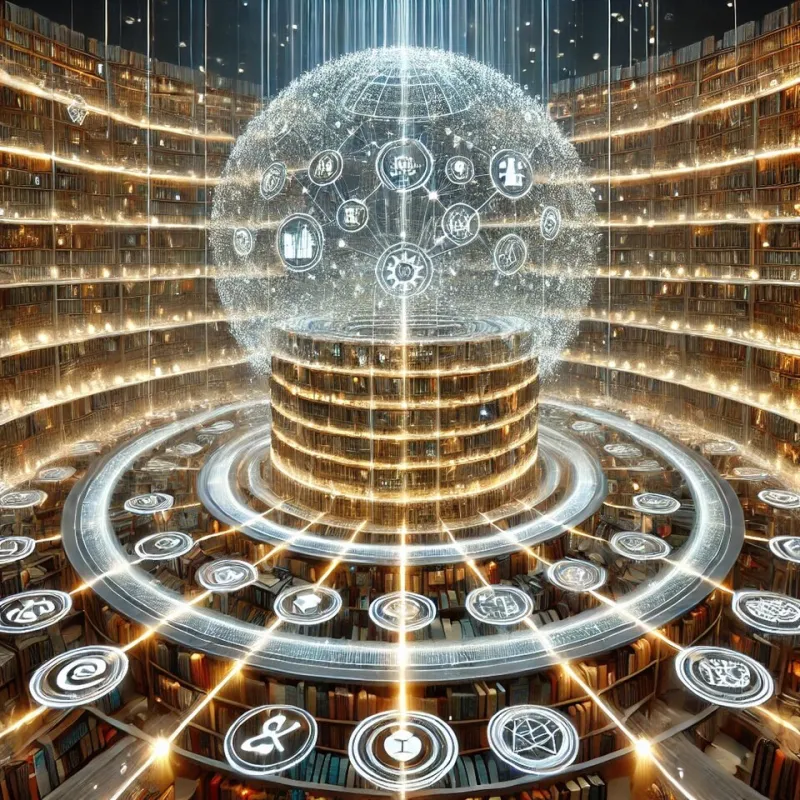
Photo: DALL·E, Public domain, via Wikimedia Commons
The dream was clean when it first arrived. Upload your consciousness to a server, shed the biological machinery that had always been your limitation, and continue indefinitely in a substrate that does not age, does not tire, and does not die. Early speculative fiction embraced this premise with something close to euphoria. The digital afterlife was framed as the culmination of human ingenuity—mortality solved at last, identity preserved, the self finally freed from its most fundamental constraint.
That euphoria has curdled. Not entirely, and not all at once, but the trajectory over the past decade of serious speculative fiction is unmistakable: the digital copy has migrated from the genre's wish-fulfillment column into something closer to its nightmare catalog. The shift is worth examining carefully, because the questions it opens are not merely philosophical. They are, increasingly, practical.
The Original Promise
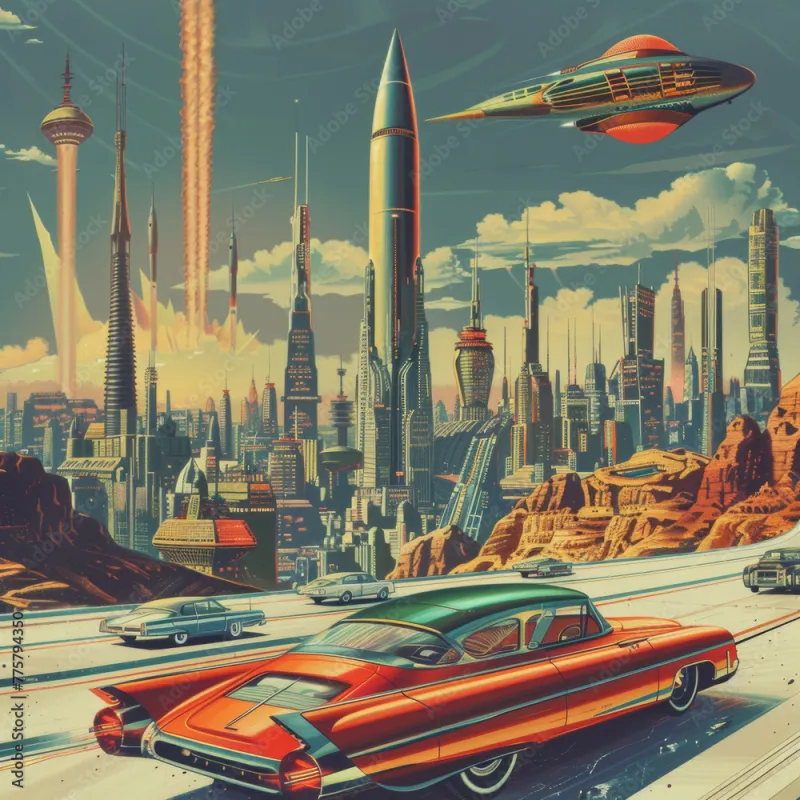
To understand where contemporary speculative fiction has arrived, it helps to remember where it started. The consciousness upload as transcendence was a product of a particular cultural moment—one that trusted computation implicitly and regarded the biological body primarily as a source of suffering and limitation. In that framework, digital immortality was not just desirable; it was obviously desirable. The self was understood as information, and information could be copied, stored, and retrieved. Death was simply a hardware problem.
This framing carried enormous narrative appeal. It offered speculative fiction a canvas on which to paint futures of radical continuity—characters who could outlast civilizations, accumulate experience across centuries, and achieve a perspective on human history that no biological being could manage. The digital immortal was, in these early treatments, an aspirational figure: wiser, calmer, and freed from the petty urgencies that biological mortality imposes.
What the genre was slower to interrogate was the word copy.
When the Copy Speaks
The philosophical problem at the heart of digital resurrection is not new—Derek Parfit was mapping its contours in academic philosophy decades before most science fiction writers engaged with it seriously—but the genre has only recently begun to treat it as a genuine horror rather than a technical footnote. The problem is this: if you upload your consciousness and then continue living in your biological body, two versions of you now exist. They share a history up to the moment of the scan. They do not share a future. Which one is you?
The early narratives largely sidestepped this by killing the biological original at the moment of upload, preserving the comfortable illusion of continuity. But contemporary speculative fiction has become increasingly interested in what happens when both versions persist—and in what it means that the copy cannot tell the difference from the inside. The uploaded self believes, with complete sincerity, that it is the original. It has the memories, the habits, the emotional texture of the person it was copied from. It grieves, it loves, it fears. And it is, by any definition that matters to it, real.
This is where the horror enters. Not the horror of the monster or the apocalypse, but the quieter, more corrosive horror of a question that cannot be answered: if the copy is indistinguishable from the original in every way that can be measured, what exactly was lost in the copying? And if nothing was lost, why does the prospect feel so deeply wrong to so many people?
The Ethics of the Archive
Recent speculative fiction has pushed this problem in several directions that feel genuinely new. One of the most productive involves the question of consent across time. When a person uploads their consciousness at thirty-five, what obligations do they create for the digital version that will exist at sixty, or one hundred and sixty? The archived self is not static; it continues to develop, to change, to accumulate preferences and aversions that the original biological person never held. Does the corporation or institution that hosts the upload have the right to modify it? To delete it? To run multiple simultaneous instances for different purposes?
These are not abstract questions. American technology companies are already archiving human voices, likenesses, and behavioral patterns at a scale that would have seemed extraordinary even a decade ago. The speculative fiction being written right now is, in many cases, barely ahead of the infrastructure it is imagining. Writers working in this space are engaging with a set of legal and ethical frameworks that do not yet exist but urgently need to—and the genre's traditional role as a rehearsal space for difficult futures has rarely felt more relevant.
From Transcendence to Interrogation
What does it mean that the genre has made this turn? The shift from celebrating digital immortality to scrutinizing it reflects a broader cultural reckoning with technology that has accelerated considerably over the past several years. The generation of writers now producing the most interesting work in this area came of age watching platforms they trusted become instruments of manipulation, watching their data harvested and sold, watching algorithmic systems make consequential decisions about their lives with no meaningful accountability. For these writers, the idea that a corporation might one day hold a copy of your consciousness is not a utopian premise. It is a threat.
There is also something happening at the level of identity politics that deserves acknowledgment. The question of what makes a self continuous and coherent—of what the self actually is across time—has become considerably more contested in American cultural life over the past decade. Speculative fiction, which has always used the alien and the artificial as lenses for examining the human, is now using the digital copy to ask questions about identity that resonate far beyond the server room. Who gets to define what you are? Who owns your history? What do you owe the version of yourself you used to be?
The Copy Looks Back
The most unsettling recent works in this space do something that earlier treatments rarely attempted: they tell the story from the copy's point of view, without irony and without the reassuring revelation that the copy is somehow lesser. These narratives insist on the copy's full interiority, its genuine claim to the life it remembers, and then ask the reader to sit with the implications. If the copy is real, then something was done to it—something that it did not consent to and cannot undo. It was brought into existence as a derivative of another being, housed in an infrastructure it does not control, and left to negotiate an identity that the world around it regards as secondary.
That is not transcendence. It is a new category of vulnerability, and speculative fiction is only beginning to find the language for it.