Before You Can Catch It: How Speculative Fiction Turns Conceptual Speed Into a Form of Dread
There is a particular sensation that arrives somewhere around the third chapter of a well-constructed speculative novel—a moment when the reader realizes, with quiet alarm, that the text has already moved past the point where any of its central premises can be safely questioned. The worldbuilding has accelerated. The implications have compounded. And the cognitive ground that might have supported a measured skepticism has been covered too quickly to stand on.
This is not an accident. It is, increasingly, the point.
The Architecture of Accumulation
Contemporary speculative fiction has developed a structural habit that deserves more critical attention than it typically receives: the deliberate stacking of unverified ideas. A novel will introduce a technological premise—say, a form of neural interface that blurs the boundary between individual memory and shared data—and rather than pause to establish its internal logic, it immediately layers a second premise atop the first. Then a third. By the time a reader might reasonably ask whether the original premise holds, four subsequent ideas have been built upon it, and dismantling the foundation would require surrendering the entire edifice.
This technique mirrors something true about contemporary American technological life. The release cycle of consumer technology, the pace of platform evolution, the speed at which cultural norms around privacy or identity or labor reorganize themselves—none of these developments pause for public deliberation. They arrive, accumulate, and become assumed infrastructure before the majority of people have finished forming an opinion about whether they were desirable in the first place. Speculative fiction, at its most formally ambitious, has internalized this rhythm and reproduced it on the page.
The result is a genre that increasingly functions less as a warning system and more as a simulation of the experience of being warned too late.
Speed as Thematic Argument
To describe this quality as merely a pacing choice would be to misread its ambition. When writers like N.K. Jemisin, Kim Stanley Robinson, or Ted Chiang deploy ideas at a rate that outruns easy comprehension, they are not simply keeping readers engaged. They are making an argument about the nature of knowledge itself—specifically, about the conditions under which certainty becomes unavailable.
Chiang, in particular, has built a body of work that is almost architecturally devoted to this effect. His stories frequently introduce a speculative premise with apparent clarity, then spend their remaining pages demonstrating how that clarity was provisional. The reader arrives at the final paragraph having understood everything and verified nothing. The ideas have moved too fast for the kind of epistemological traction that would allow for confident interpretation. What remains is a productive disorientation—an anxiety that feels less like confusion and more like recognition.
This is worth naming precisely: the anxiety produced by conceptual speed in speculative fiction is not the anxiety of being lost. It is the anxiety of understanding exactly where you are and realizing the terrain is moving.
Vapor and Velocity
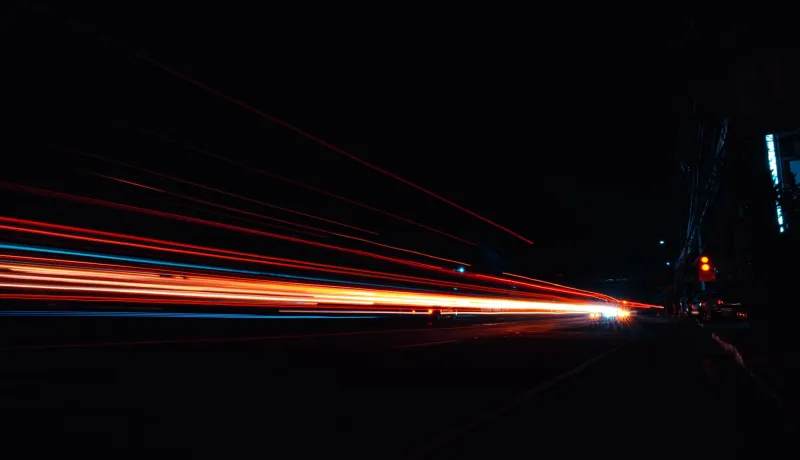
The metaphor embedded in this site's identity is more analytically useful here than it might first appear. Vapor trails are evidence of movement—visible proof that something has passed through a space at a speed the observer could not match in real time. The trail is interpretable; the object that made it is already elsewhere. Contemporary speculative fiction operates on a similar principle. What a reader holds in their hands is the residue of ideas that have already traveled beyond the point of comfortable scrutiny. The narrative has moved on. The reader is left with the wake.
This is a formal achievement, but it carries ethical weight as well. A genre that deliberately outruns its own verifiability is making a claim about what fiction can responsibly do in an era of accelerating change. It is suggesting that the appropriate response to a world moving faster than human cognition can comfortably process is not to slow the fiction down—not to produce more digestible futures—but to replicate the discomfort honestly and ask readers to sit with it.
The Productive Anxiety of Incompletion
Critical conversations about speculative fiction often treat ambiguity as a flaw to be managed or a complexity to be appreciated. What receives less attention is ambiguity produced not by thematic opacity but by sheer conceptual momentum—the kind of uncertainty that arises not because a text is unclear but because it is moving too fast for clarity to settle.
This distinction matters because the two forms of uncertainty produce different kinds of readers. Thematic ambiguity invites interpretation. Velocity-induced uncertainty invites something closer to recalibration. A reader who has been outpaced by a novel's idea-stack does not simply need to think harder about what they have read; they need to adjust their relationship to the act of comprehension itself. They need to accept that some portion of what they have experienced will remain unresolved—not because the author failed to resolve it, but because resolution was never structurally available.
In the American cultural context, where intellectual confidence is frequently treated as a civic virtue and uncertainty as a problem to be solved, this is a quietly radical demand. Speculative fiction that moves faster than certainty is not asking readers to be comfortable with confusion. It is asking them to recognize confusion as an accurate response to the world they already inhabit.
What Remains After the Speed
None of this means that speculative fiction operating at high conceptual velocity is exempt from craft obligations. Acceleration without direction is chaos, not argument. The writers who execute this technique most effectively—those whose work generates productive anxiety rather than mere frustration—are those who ensure that the emotional architecture of a narrative remains navigable even when its intellectual architecture has moved beyond reach.
A reader may not be able to fully interrogate the technological premises of a given novel. They may not be able to verify the internal logic of a speculative system that has been built too quickly for scrutiny. But they can follow a character's grief, or a community's fracture, or the particular texture of a world in which something essential has been lost. The emotional register, in other words, moves at a pace the reader can match—even when the ideas do not.
This is perhaps the most sophisticated formal achievement available to contemporary speculative fiction: the construction of texts in which conceptual velocity and emotional legibility operate at different speeds simultaneously. The ideas outrun you. The feeling does not. And in the gap between those two experiences—in the space between what you can verify and what you can feel—the genre does its most honest and most necessary work.
The future, as speculative fiction keeps demonstrating, will not wait for us to be ready. The best of the genre has stopped pretending otherwise.