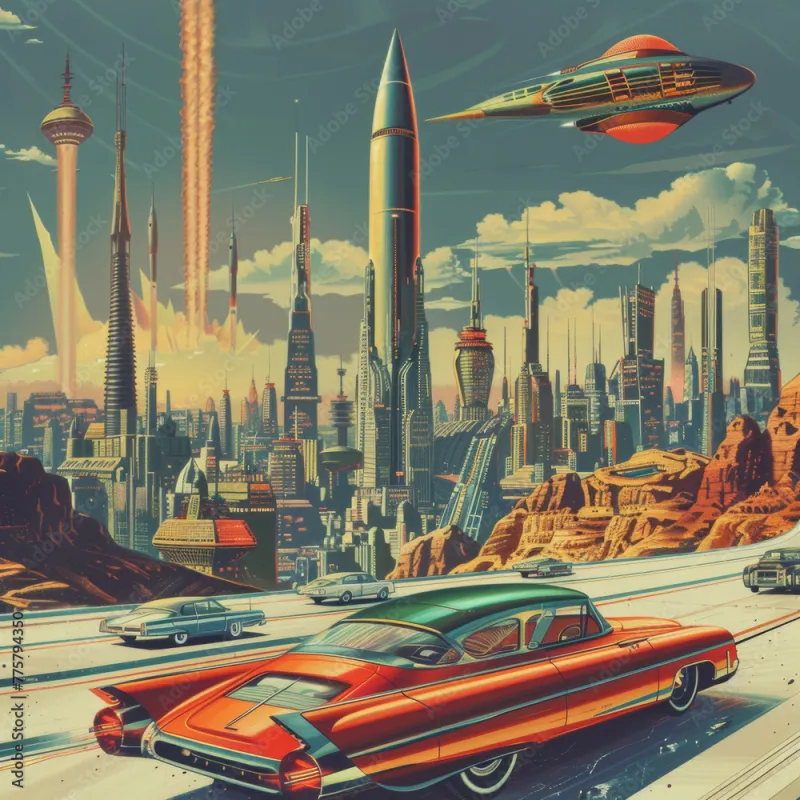
What the Machine Cannot Dream: Speculative Fiction and the Limits of Algorithmic Imagination
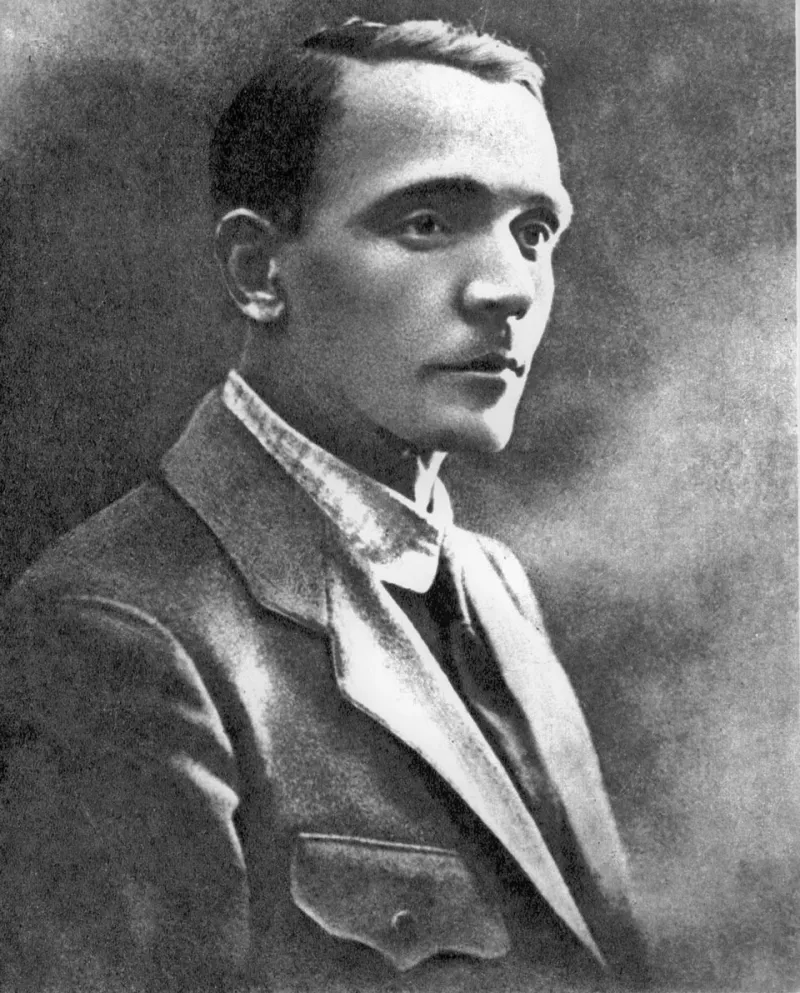
Photo: Unknown authorUnknown author, Public domain, via Wikimedia Commons
There is a particular kind of silence that precedes a great science fiction novel. It is the silence of a writer sitting with a question that has no comfortable answer — a question born not from a dataset, but from grief, wonder, or the particular texture of a Tuesday afternoon that felt inexplicably wrong. That silence, and what emerges from it, is something no algorithm has yet learned to replicate.
In recent years, AI writing tools have moved from novelty to near-ubiquity across the American creative landscape. Publishers experiment with them. Screenwriters consult them. Even some authors, pressed for time or searching for a spark, have begun to treat them as collaborative partners. Within speculative fiction circles, the conversation has grown especially charged. If science fiction is, at its core, an act of imagining futures, what happens when the imagining is delegated to a system trained on the past?
The Prediction Trap
The central limitation of AI-generated narrative is not a technical one — it is philosophical. Large language models are, by design, engines of probability. They generate text by predicting what word is most likely to follow the last, drawing on vast archives of human writing to construct plausible sequences. This makes them extraordinarily capable of producing prose that resembles speculative fiction. It does not make them capable of producing speculative fiction that matters.
The distinction is not trivial. The works that have defined American science fiction — from Ursula K. Le Guin's explorations of gender and power in The Left Hand of Darkness to Samuel R. Delany's layered meditations on language and identity, to more recent landmarks like N.K. Jemisin's Broken Earth trilogy — do not derive their force from competent extrapolation. They derive it from the collision of a singular consciousness with the world as it actually is. Le Guin was not predicting the future. She was interrogating the present through a lens ground by her own specific cultural inheritance, her politics, her fears, her capacity for tenderness.
An algorithm trained on the canon of science fiction can produce a sentence that sounds like Le Guin. It cannot produce the need that drove her to write.
World-Building as Emotional Architecture
One of the most demanding disciplines in speculative fiction is world-building — the construction of coherent, internally consistent realities that feel genuinely inhabited. Skilled practitioners understand that the best world-building is never purely logistical. The strange gravity of a distant planet matters because of what it does to the bodies and relationships of the people who live beneath it. The economics of a post-scarcity society matter because of the new forms of longing and status anxiety they produce.
This is where algorithmic storytelling reveals its most significant blind spot. AI systems can generate world-building that is consistent — they can maintain internal rules, populate timelines, and avoid obvious contradictions. What they cannot do is ensure that every invented detail carries emotional weight, that the fictional world's architecture resonates with the reader's lived experience in ways that feel simultaneously alien and deeply recognizable.
Consider how Octavia Butler built the world of Kindred — a novel that moves between 1970s California and antebellum Maryland not as a formal exercise in time travel mechanics, but as an act of visceral, necessary reckoning with American history. The world-building serves the wound. Every element is chosen because it illuminates something true about power, survival, and the body's memory of trauma. No system trained on existing texts could have generated that particular convergence of form and urgency, because that convergence was not derived from prior literature. It was derived from Butler's life.
Cultural Nuance and the Untranslatable
Speculative fiction has always been a literature of margins — a genre in which writers from communities outside the mainstream have found room to articulate experiences that realist fiction struggled to contain. The Afrofuturist tradition, Chicano science fiction, Indigenous speculative writing: these movements exist because certain truths about American life require the pressure of the fantastical to become fully visible.
AI models are trained predominantly on existing text, which means they inherit the biases and omissions of the archive. They are statistically less likely to generate narratives centered on marginalized experiences, not because they are programmed to exclude them, but because the training data underrepresents them. The result is a kind of algorithmic conservatism — a tendency to reproduce the center rather than the edge, the expected rather than the necessary.
This is not a problem that better training data alone can solve. Cultural nuance is not a feature that can be added to a model. It is the product of a writer who has lived inside a particular set of contradictions and found a way to render those contradictions with precision and care.
The Vapor Trail Argument
There is a metaphor embedded in the very nature of speculative fiction that speaks to this question. A vapor trail is the trace left by something that has already passed — evidence of motion, of a path taken through atmosphere. Great science fiction works in a similar fashion. It leaves a trail that readers can follow not because the writer correctly predicted the future, but because the writer understood the present with unusual depth and honesty.
Algorithms can produce vapor trails that look convincing from a distance. They can mimic the shape of the arc, the density of the condensation. What they cannot do is generate the heat and velocity that created the trail in the first place.
The Genre's Necessary Wager
None of this is an argument against writers using AI tools thoughtfully — as research aids, as structural sounding boards, as generators of raw material to be shaped and interrogated. The history of speculative fiction is a history of writers who embraced new technologies and found ways to make them serve human ends.
It is, however, an argument for clarity about what those tools cannot provide. The future of speculative fiction — its capacity to illuminate, to disturb, to console — depends on writers who are willing to sit with that silence before the first sentence, who bring to the page not just competence but necessity. The algorithm can predict what comes next. Only the writer can imagine why it matters.